
Understanding the difference between a life settlement broker vs provider is important when deciding how to sell a life insurance policy. Both can be involved in life settlement transactions, but they serve very different roles. A provider works directly with policy owners and purchases or facilitates the purchase of qualifying policies, while a broker represents the policy owner and seeks offers from providers. The way you choose to sell can affect the process, fees, and ultimately how much of the settlement proceeds you receive.
What Is the Difference Between a Life Settlement Broker and a Provider?
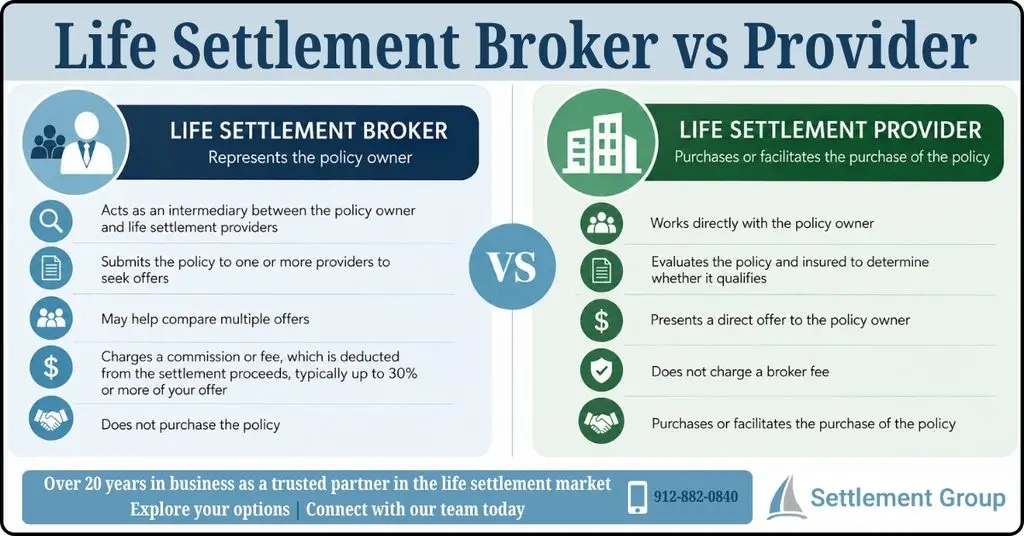
A life settlement provider is a company licensed to purchase life insurance policies from policy owners or facilitate those purchases. The provider evaluates the policy and insured, obtains the information needed to determine the policy’s value, presents an offer, prepares the transaction documents, and coordinates the transfer of ownership.
A life settlement broker serves as an intermediary between the policy owner and life settlement providers. Rather than purchasing the policy, the broker represents the policy owner and submits the case to one or more providers in an effort to obtain offers.
The basic distinction is straightforward:
- Provider: Works directly with the policy owner and purchases or facilitates the purchase of the policy.
- Broker: Represents the policy owner and seeks offers from life settlement providers.
When choosing a life settlement company, it is important to know whether the company is acting as a provider or broker. The distinction should be clearly disclosed before you proceed with a transaction.
Does a Broker or a Provider Get Me a Better Offer?
Neither approach automatically guarantees a better result.
A broker may submit a policy to multiple providers and compare the offers received. However, the highest gross offer is not necessarily the amount the policy owner ultimately receives. Broker compensation can reduce the policy owner’s net proceeds.
Working directly with a provider eliminates the broker from the transaction. The provider evaluates the policy and presents an offer directly to the policy owner, without a broker fee being deducted from the settlement proceeds.
The most useful comparison is therefore not simply the amount of an offer. Policy owners should consider the net amount they will receive after any commissions or fees.
Do I Need a Broker to Sell My Life Insurance Policy?
No. You do not need to use a broker to sell your life insurance policy.
Policy owners can work directly with a licensed life settlement provider. The provider can review the policy, obtain the necessary medical and policy information with the appropriate authorizations, evaluate whether the policy qualifies, and present an offer if there is interest in purchasing it.
Some policy owners choose to use a broker because they want someone to seek offers from multiple providers. Others prefer to work directly with a provider and avoid adding another party to the transaction.
Either way, policy owners should understand who each company represents, how it is compensated, and what they will receive if the transaction closes.
How Much Does a Life Settlement Broker Charge?
Life settlement broker compensation varies and can be significant.
Depending on the transaction and applicable state requirements, a broker may be compensated through a commission or fee associated with the sale of the policy. Broker compensation should be disclosed to the policy owner as required by applicable law.
Because broker fees can reduce the amount the policy owner ultimately receives, it is important to look at the net proceeds rather than focusing only on the gross purchase price.
For example, an offer obtained through a broker could be higher than an offer made directly by a provider, but that does not necessarily mean the policy owner will receive more money after the broker’s compensation (sometimes 30% or more of your offer) is deducted.
Before agreeing to a life settlement through a broker, ask exactly how the broker will be compensated and how much you will receive at closing.
Is It Safe to Sell Directly to a Provider Without a Broker?
Yes. Policy owners can sell directly to a licensed life settlement provider without using a broker.
Life settlement providers are regulated at the state level and must be licensed in states where licensing is required. Applicable laws can include requirements concerning disclosures, privacy, transaction documents, rescission rights, and the handling of settlement funds.
Before working with a provider, verify that the company holds the appropriate license for your state. You can also check with your state’s insurance department if you want to independently confirm a company’s licensing status. Settlement Group is a licensed life settlement provider in business for over 20 years.
Selling directly does not mean giving up the ability to review an offer or decide whether it makes sense. You are not obligated to accept an offer simply because your policy has been evaluated.
What Does a Life Settlement Provider Do?
A provider is involved throughout the life settlement process. Depending on the transaction, this can include:
- Reviewing the policy to determine whether it may qualify
- Obtaining policy information and medical records with authorization
- Evaluating the insured’s life expectancy and policy characteristics
- Determining whether an offer can be made
- Presenting the offer to the policy owner
- Preparing required disclosures and closing documents
- Coordinating the transfer of policy ownership and beneficiary rights
- Arranging for payment of the agreed-upon settlement amount
After the transaction closes, the new owner becomes responsible for maintaining the policy and paying future premiums. The policy owner receives a cash payment and no longer owns the policy or receives its death benefit.
Why Does the Difference Between a Broker and Provider Matter?
The distinction matters because a broker and provider occupy different positions in the transaction.
A broker represents the policy owner while seeking offers from providers. A provider is the party working on the purchasing side of the transaction. Understanding those roles makes it easier to know who you are dealing with, where an offer comes from, and whether compensation or fees will affect the amount you receive.
Before proceeding, ask whether the company is acting as a broker or provider, whether any fees or commissions will be deducted from your proceeds, and exactly how much you would receive at closing.
Should I Work with a Life Settlement Broker or Provider?
The right choice depends on what is most important to you.
A broker may be appropriate for someone who wants an intermediary to seek and compare offers from multiple providers and is comfortable with the broker’s compensation structure.
Working directly with a provider may appeal to policy owners who prefer a more direct transaction and do not want broker compensation deducted from their settlement proceeds.
Whichever route you choose, make sure you understand the offer, any fees or commissions, the company’s role in the transaction, and the amount you will actually receive before agreeing to sell your policy.
Find Out What Your Policy May Be Worth
If you have a life insurance policy you no longer need, want, or can afford, having it evaluated can help you determine whether a life settlement is an option before surrendering the policy or allowing it to lapse.
Settlement Group is a licensed life settlement provider and works directly with qualifying policy owners. There is no obligation to sell your policy simply because you request an evaluation or receive an offer.
Contact us today for a no-obligation policy review. 912-882-0840