If you’re wondering, can I use a life settlement to pay for long-term care, the answer is yes, if you qualify. A life settlement allows you to sell an existing life insurance policy for a lump-sum payment that can be used to cover assisted living, nursing home care, in-home assistance, and other long-term care expenses. For qualifying policies, selling life insurance may provide significantly more money than surrendering the policy to the insurance company.
As long-term care expenses continue to rise, some policy owners find themselves paying premiums on life insurance they no longer need while facing substantial costs for their own care. A life settlement may provide a way to access the value of that policy without taking on additional debt.
How Can a Life Settlement Help Pay for Long-Term Care?
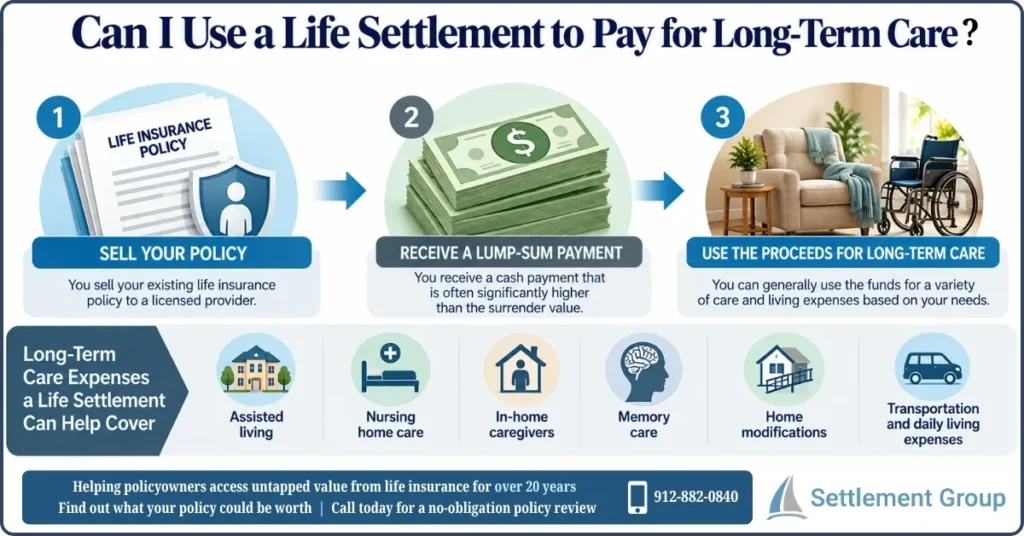
A life settlement converts an existing life insurance policy into a lump-sum cash payment. Rather than continuing to pay premiums to maintain a death benefit for beneficiaries, the policy owner sells the policy to a third party. Once the transaction is completed, the purchaser becomes responsible for future premiums and receives the death benefit when the insured passes away. The seller receives the settlement proceeds and can use them according to their financial needs.
Unlike a traditional long-term care insurance policy, life settlement proceeds are not restricted to specific types of care or approved providers. This gives policy owners flexibility when deciding how to pay for their ongoing needs, whether that involves residential care, professional caregivers, or expenses associated with remaining at home.
What Long-Term Care Expenses Can Life Settlement Proceeds Cover?
Long-term care needs vary considerably. Some individuals require occasional help with everyday activities, while others need continuous supervision or medical assistance. Because there are not restrictions on life settlement proceeds, policy owners can decide how to allocate the funds rather than submitting individual care expenses for reimbursement.
Life settlement proceeds can be used for expenses such as:
- Assisted living: Monthly residential fees, personal care services, and additional assistance.
- Nursing home care: Skilled nursing facilities, residential care, and related expenses.
- In-home caregivers: Professional caregivers who assist with bathing, dressing, meal preparation, and other daily activities.
- Memory care: Specialized residential care and supervision for individuals with Alzheimer’s disease or other forms of dementia.
- Home modifications: Accessibility improvements, including ramps, bathroom modifications, and mobility equipment.
- Additional living expenses: Transportation, household assistance, and other costs associated with receiving care.
The flexibility to use settlement proceeds for different expenses can be particularly valuable when care needs change over time or when multiple services are required.
Can I Sell My Life Insurance Policy to Pay for Assisted Living?
Assisted living is one of the expenses that life settlement proceeds may help cover. Many assisted living communities charge monthly fees that include housing, meals, and basic personal care. Additional services may increase those costs, particularly when a resident requires more assistance.
For someone who owns a qualifying life insurance policy, a settlement may provide funds to help pay these expenses. This can be particularly useful when retirement income and savings are insufficient to cover the full cost of care. However, the amount received from a settlement depends on the individual policy and insured, so a life settlement is not guaranteed to cover the entire cost of assisted living or other long-term care services.
Can I Use a Life Settlement to Pay for In-Home Care?
A life settlement can also help individuals who prefer to remain in their own homes rather than move into a residential care facility. In-home care may include assistance with personal hygiene, dressing, mobility, medication reminders, meals, and household tasks. Depending on the person’s needs, care may be provided for a few hours each week or on a more extensive schedule.
Settlement proceeds can help pay professional caregivers, make a home more accessible, or cover other expenses that allow an individual to remain at home longer. This flexibility may be especially valuable for families who want to arrange care around the individual’s preferences rather than the limitations of a particular insurance benefit.
Do I Need Long-Term Care Insurance to Use a Life Settlement?
A life settlement does not require you to own a long-term care insurance policy. Long-term care insurance is specifically designed to help pay qualifying care expenses under the terms of the contract. A life settlement, by contrast, involves selling an existing life insurance policy and receiving payment for it.
The two are separate financial arrangements. A policy owner may consider a life settlement even if they never purchased long-term care insurance or have exhausted benefits available through another policy. Some life insurance policies also include long-term care riders or accelerated death benefit provisions, so before selling, it is worth reviewing whether your existing policy offers benefits that could help pay for care without transferring ownership.
Who Qualifies for a Life Settlement to Pay for Long-Term Care?
Traditional life settlements generally involve insureds age 65 or older, although younger individuals may qualify depending on their health. Policies typically need a death benefit of at least $100,000, and several types of life insurance may qualify, including universal life, guaranteed universal life, whole life, and certain convertible term policies.
Eligibility and potential settlement value depend on factors such as the insured’s age and medical history, death benefit, future premiums, and policy guarantees. You do not have to be terminally ill or already receiving long-term care to qualify for a traditional life settlement. However, an individual’s health is an important factor in determining whether an offer can be made.
How Much Money Can I Receive from a Life Settlement for Long-Term Care?
There is no standard amount that a life insurance policy will sell for. A life settlement offer is less than the policy’s death benefit but may be significantly higher than its cash surrender value. For example, two individuals with $500,000 life insurance policies may receive very different offers because of differences in their health, ages, premium requirements, and policy provisions.
The proceeds can provide an additional source of funds for long-term care, but the amount available must be determined through an individual policy evaluation. Before surrendering or allowing a policy to lapse because the premiums have become unaffordable, consider whether it may qualify for a life settlement.
Will a Life Settlement Affect Medicaid Eligibility?
It can. Life settlement proceeds may affect eligibility for Medicaid and other means-tested assistance programs. Medicaid has financial eligibility requirements, and receiving a lump-sum payment from the sale of a life insurance policy may change an individual’s countable income or assets. The effect depends on the person’s circumstances and the applicable program rules.
For individuals currently receiving Medicaid benefits or planning to apply, it is important to consult a qualified elder law attorney or benefits professional before selling a policy. Life settlement proceeds may also have federal income tax implications, so a tax professional can help determine how the transaction may affect your individual situation.
Should I Sell My Life Insurance Policy to Pay for Long-Term Care?
Selling a life insurance policy may make sense when the policy is no longer needed for its original purpose and the owner could benefit more from having access to its value today. However, a life settlement permanently transfers ownership of the policy. The purchaser becomes responsible for future premiums and receives the death benefit, meaning the original beneficiaries will no longer receive that payment.
Before making a decision, consider your expected care expenses, other financial resources, the needs of your beneficiaries, and whether the policy includes benefits that could be used without selling it. A life settlement is one option for accessing funds, but it should be evaluated alongside other available resources and long-term care planning considerations.
Find Out if Your Life Insurance Policy Can Help Pay for Long-Term Care
Settlement Group is a licensed life settlement provider that works directly with policy owners. We evaluate existing life insurance policies, arrange funding, present offers when available, and coordinate transactions through closing.
If you or a family member is facing long-term care expenses, a life settlement may provide access to funds that would otherwise remain tied to an existing life insurance policy. Our team can review your policy to determine whether it may qualify and whether an offer is available.
Contact Settlement Group today for a no-obligation policy review. 754-296-9034